

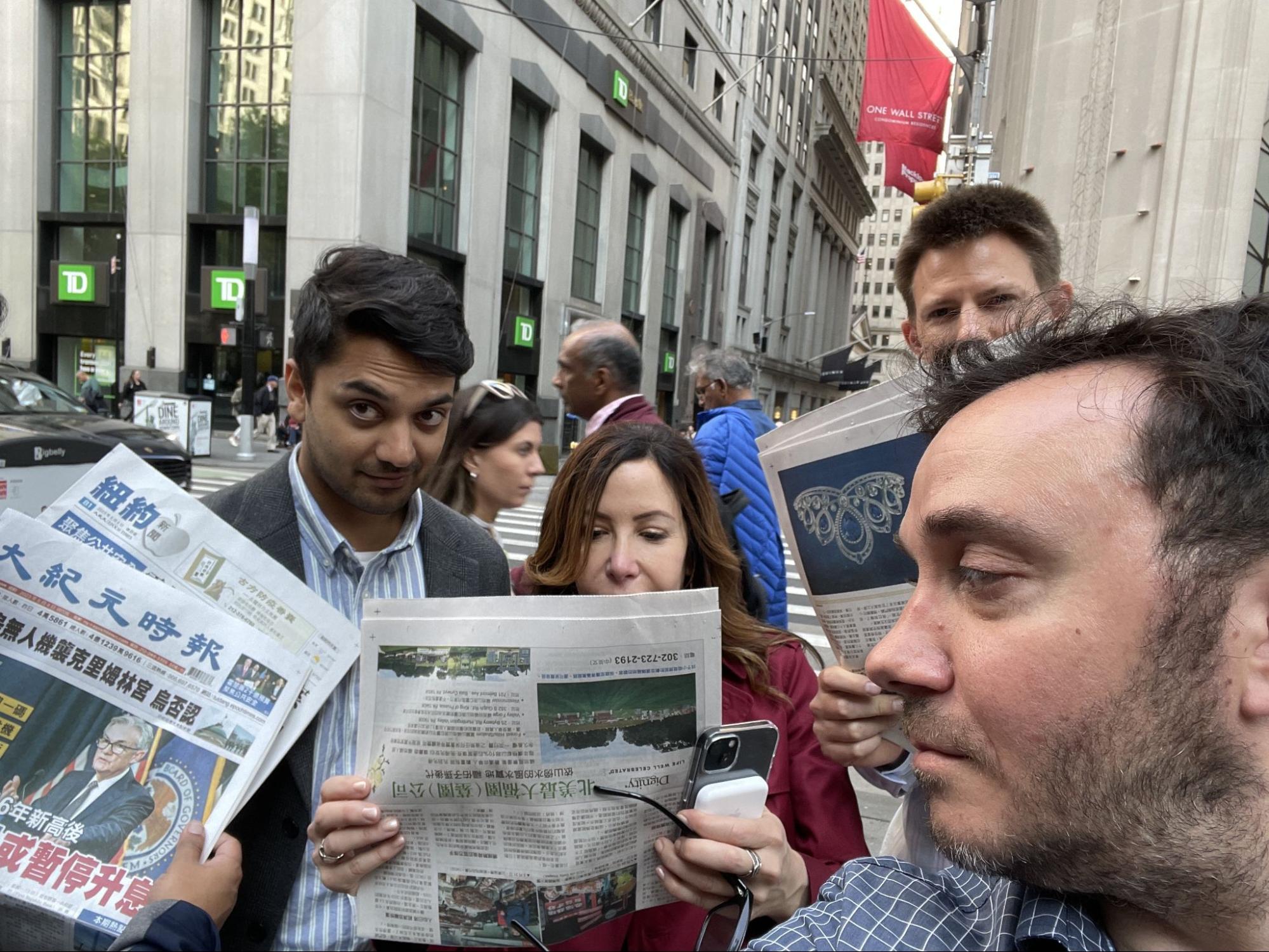
Planning a corporate team-building event in New York City doesn’t need to be chaotic. With the right route, timing, and host, an NYC scavenger hunt can go from “logistical headache” to the most-talked-about event of the year. This guide walks HR, office managers, and event planners through every step so you can focus on outcomes, not logistics.
Why Corporate Scavenger Hunts Work in New York City
New York City isn’t just a backdrop; it’s a character in your team-building story. The energy of Times Square, the history of Lower Manhattan, the creativity of Brooklyn: every neighborhood offers something different for corporate team building activities that NYC companies actually remember.
Unlike conference room workshops or trust falls in a hotel ballroom, scavenger hunt activities NYC teams experience get people moving, problem-solving together, and seeing their city through fresh eyes. You’re not forcing collaboration; you’re creating conditions where it happens naturally.
And here’s the thing: when done right, these events deliver measurable results. Better communication. Stronger cross-department relationships. New hires who actually feel welcomed. Remote employees who finally meet their Slack avatar colleagues in person.
Step 1: Define Your Goals and Team Size
Before you book anything, get clear on what you’re actually trying to accomplish. Are you onboarding a new cohort? Breaking down silos between departments? Rewarding a team that just closed a brutal quarter?
Your answer shapes everything else.
Small teams (10–30 participants): Ideal for deep collaboration and relationship building. Everyone interacts with everyone. Choose routes that allow for conversation and connection, not just racing through checkpoints.
Mid-size groups (30–100 participants): You’ll want to split into smaller competing teams but keep the group together for kickoff and wrap-up. Consider neighborhoods with multiple routes or locations that can accommodate team celebrations afterward.
Large corporate gatherings (100+ participants): Logistics matter more here. You need a platform that can handle wave starts, multiple simultaneous routes, and real-time leaderboards that keep energy high across dozens of teams.
Step 2: Choose Your NYC Location and Route Style
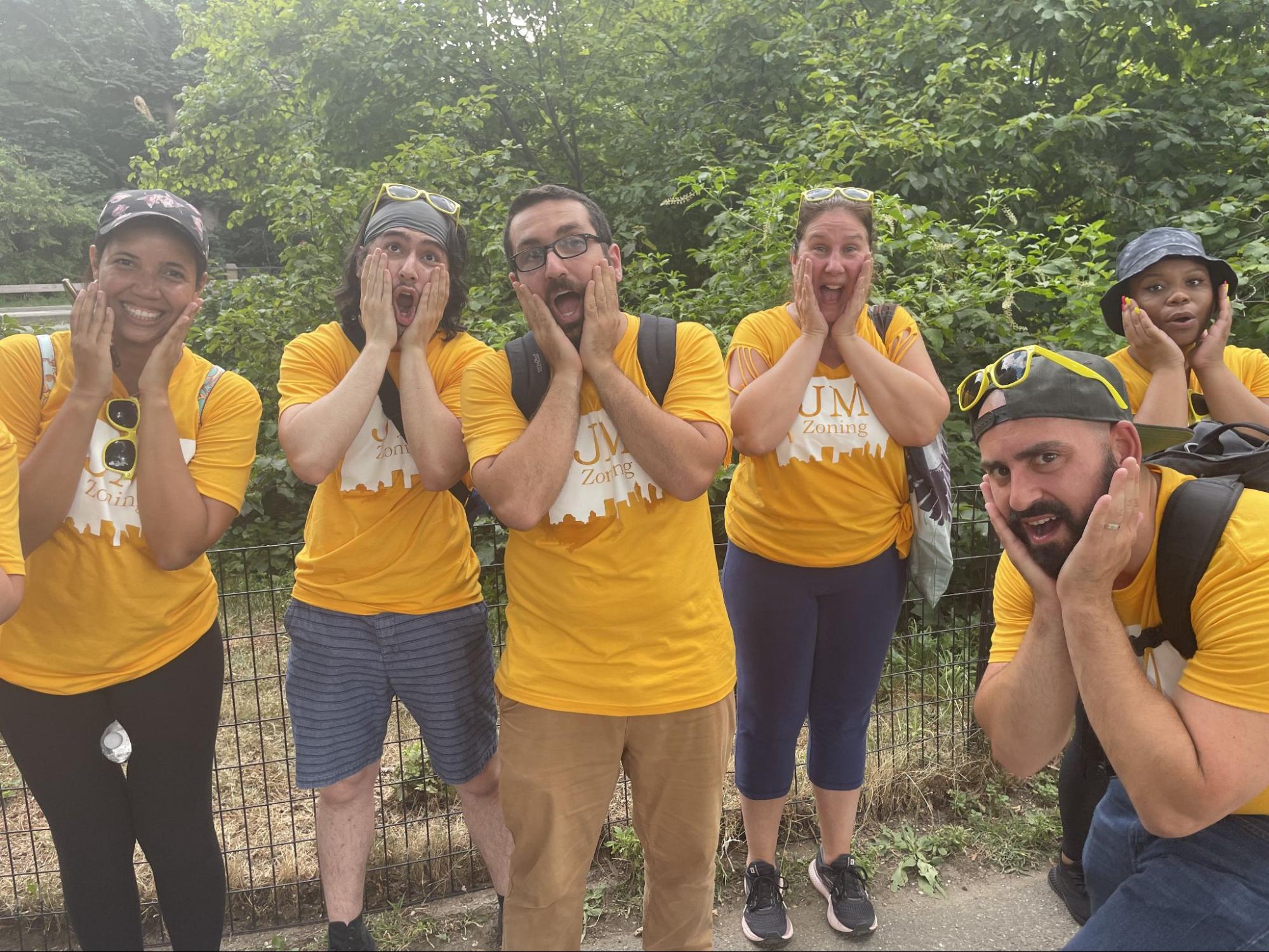
Not all New York corporate team-building games need the same setting. Match your neighborhood to your culture and objectives.
Financial District & Lower Manhattan: History-rich routes for teams who value legacy and storytelling. Narrow colonial streets. Harbor views. Proximity to corporate offices makes post-event drinks easy.
Midtown & Times Square: High-energy, iconic, tourist-heavy. Great for out-of-town teams or those who want that “only in New York” experience. Can feel chaotic during peak hours.
Brooklyn (DUMBO, Williamsburg): Creative, laid-back vibe. Perfect for tech companies, agencies, and teams who want Instagram-worthy moments without Midtown’s intensity. Great food and drink options for afterward.
Central Park: Outdoor space with flexibility. Works year-round (yes, even winter, just plan accordingly). Ideal for wellness-focused companies or teams who’ve been stuck inside too long.
You’re not limited to outdoor routes, either. Museum hunts, gallery crawls, and hybrid indoor-outdoor formats all work, though weather becomes less of a concern with app-led mobile experiences that adapt on the fly.
Step 3: Set Your Budget and Timeline
Let’s talk numbers, because this is where most planners get stuck.
How much does a corporate team-building scavenger hunt cost in NYC?
Budget-friendly (Under $50/person): Self-guided app experiences. Minimal facilitation. Works for casual team outings and smaller budgets. You handle logistics yourself.
Mid-range ($50–$100/person): Professionally hosted events with custom challenges, dedicated support, and photo/video features. This is the sweet spot for most company outings and scavenger hunts NYC planners book.
Premium ($100–$200+/person): Fully customized experiences with branded challenges, CSR tie-ins, professional photography, post-event analytics, and white-glove service. Common for executive retreats, major milestone celebrations, or annual company-wide gatherings.
Factor in food, drinks, and transportation if you’re including those. A craft beer tasting or rooftop celebration can turn a good event into the one people talk about for months.
Planning Timeline
6–8 weeks out: Ideal timeline. You have time to customize, coordinate with venues, and actually promote the event internally so people get excited.
3–4 weeks out: Still doable. You’ll have fewer customization options but can absolutely pull off a successful event.
Less than 2 weeks: Possible with the right partner, but expect to work with existing routes and formats rather than building something custom.
Step 4: Plan the Logistics
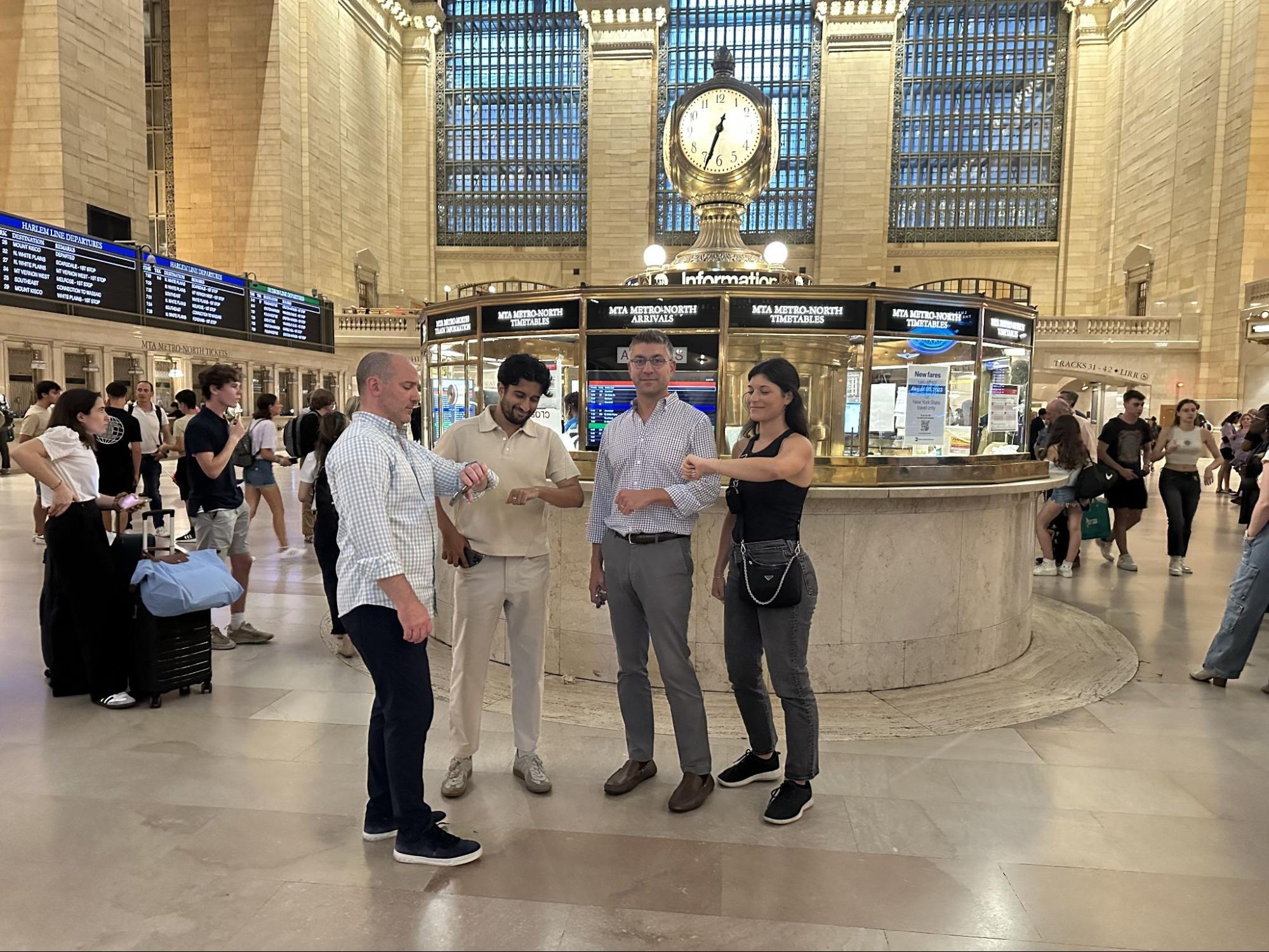
This is where good events become great ones or fall apart completely.
How long should NYC team-building activities last?
Most corporate scavenger hunts run 90 minutes to 2.5 hours of active gameplay. Add 30 minutes for kickoff instructions and 30–45 minutes for post-game wrap-up and awards. Figure on a 3-hour commitment total.
Lunch events work well at 90 minutes. After-work events can stretch longer; people are more relaxed and in less of a rush.
NYC Scavenger Hunt Planning Checklist
8 weeks before:
- Define objectives and success metrics
- Confirm participant count and budget
- Select a neighborhood and a route style
- Book your platform or event partner
4 weeks before:
- Send a save-the-date to participants
- Finalize route and custom challenges
- Book any add-ons (food, drinks, venues)
- Confirm accessibility needs
2 weeks before:
- Send detailed participant communication
- Create teams (or let people self-select)
- Test the app and route if possible
- Confirm weather backup plan
1 week before:
- Final headcount confirmation
- Send reminder emails with what to wear/bring
- Brief any internal champions or team captains
- Prep prizes or recognition
Day of:
- Arrive 30 minutes early for the kickoff location
- Have a backup plan for technology issues
- Bring enthusiasm; your energy sets the tone
- Capture photos and moments for internal comms
Step 5: Choose Your Format and Technology
The days of clipboards and paper clues are over. Modern team building scavenger hunts run on mobile apps that handle everything from challenges to leaderboards to photo submissions.
What to look for:
Mobile-first platform: Everyone has a phone. Use it. No downloads should mean no friction.
Photo and video challenges: These create the moments people remember and share. Bonus: you get content for internal communications and social media.
Real-time leaderboards: Competition drives engagement. Teams want to know where they stand.
Customization options: Can you add your company logo? Include industry-specific trivia? Build in your values or recent wins?
Multi-city capability: If you have offices in multiple cities, unified custom team building activities let you run the same event everywhere for consistency.
CSR integration: Some platforms allow you to tie challenges to charitable donations or community impact. Great for companies with strong social responsibility cultures.
Step 6: Customize the Experience
Generic scavenger hunts are fine. Customized ones become legendary.
Think about weaving in:
- Company history and milestones: “Find the building where our founders first met”
- Product knowledge: Photo challenges that incorporate your actual services
- Values and culture: Challenges that require teamwork, creativity, or the behaviors you want to reinforce
- Inside jokes: The kind only your team would get
- New hire education: Turn onboarding into adventure
The best employee engagement activities in NYC don’t feel like “corporate training disguised as fun.” They feel like genuine experiences that happen to also build your culture.
Step 7: Handle Team Formation Strategically
Random teams? Department-based? Self-selected?
There’s no single right answer, but there is a wrong one: letting people only hang with their existing friends.
For breaking down silos: Randomize completely or intentionally mix departments. Yes, people will grumble at first. They’ll thank you afterward.
For strengthening existing teams: Let departments or project groups stay together. The collaboration they practice during the hunt transfers directly back to work.
For onboarding: Pair new hires with veterans. Make sure every team has a mix so newbies get integrated fast.
Teams of 4–6 people work best. Smaller than that and you lose momentum. Larger and some people check out.
Step 8: Promote Internally and Build Excitement
You’re not just planning an event. You’re selling one.
Send teaser emails. Drop hints in Slack. Create a countdown. Make people actually want to participate instead of treating it like another mandatory HR initiative.
Show what past teams have done. Share photos from previous NYC team building events for companies similar to yours. Build FOMO.
And for the love of all that is holy: be clear about what people should wear and bring. “Business casual” means nothing when you’re walking two miles through Brooklyn. Say “comfortable walking shoes” and “dress for weather.”
Step 9: Execute the Event
Day-of tips that separate smooth events from disasters:
Start with energy. Your kickoff sets the tone. If you’re bored, they’re bored. If you’re pumped, they’re pumped.
Keep instructions simple. Nobody remembers a 10-minute explanation of rules. Give them the basics, show them the app, set them loose.
Be visible and available. Have someone monitoring the platform who can answer questions. Technology is great until someone’s phone dies.
Celebrate throughout. When teams post funny photos or hit milestones, acknowledge it in real-time. Keep momentum going.
End with recognition. Awards, shout-outs, funny superlatives; it doesn’t matter. People need closure and acknowledgment.
Step 10: Measure Success and Follow Up
The event ends. Your job doesn’t.
Immediate follow-up (within 24 hours):
- Share photos and highlights
- Thank participants
- Tease results or funny moments
One week later:
- Survey participants for feedback
- Calculate engagement metrics
- Share results with leadership
One month later:
- Review any culture or collaboration shifts
- Plan your next event (strike while the iron’s hot)
The best New York corporate team building games aren’t one-offs. They’re the first in a series that becomes “just what we do here.”
Common Mistakes to Avoid
Overcomplicating the route. You’re not planning the Amazing Race. Keep it walkable, logical, and achievable in your timeframe.
Ignoring weather. Have a backup plan. Spring and fall are gorgeous. Summer can be brutal. Winter is cold. Plan accordingly.
Forgetting about accessibility. Not everyone can walk three miles. Not everyone has a smartphone. Not everyone can climb stairs. Ask ahead. Plan better.
Skipping the debrief. The best insights come after, when people reflect on what they learned about their teammates.
Treating it like a checkbox. If you’re doing this just because “we should do team building,” save your money. Participants can smell half-hearted effort.
Why Strayboots Makes Planning Easier
Look, you could coordinate all of this yourself. Build the challenges. Map the route. Handle the technology. Troubleshoot when Greg from Accounting can’t figure out how to upload a photo.
Or you could work with a platform that’s done this thousands of times across hundreds of cities.
Strayboots handles the heavy lifting so you can focus on the experience. Mobile app-led hunts that work anywhere. Customization without complexity. Real-time engagement tracking. CSR options that tie your event to actual impact.
Whether you’re planning for 15 people or 500, in Manhattan or across multiple offices nationally, the platform scales without you having to become an event-planning expert overnight.
Frequently Asked Questions
How much does a corporate team-building scavenger hunt cost in NYC?
Expect $50–$100 per person for professionally hosted events with custom elements. Budget-friendly self-guided options run under $50 per person. Premium experiences with full customization, CSR integration, and white-glove service range from $100–$200+ per person. Factor in add-ons like food, drinks, or venue rentals separately.
How long should NYC team building activities last?
Most corporate scavenger hunts run 90 minutes to 2.5 hours for active gameplay. Add 30 minutes for kickoff and 30–45 minutes for wrap-up and awards. Plan for a total commitment of about 3 hours. Lunch-break events work well at 90 minutes, while after-work gatherings can extend longer when participants are more relaxed.
Can we run scavenger hunts in multiple NYC neighborhoods at once?
Yes, especially useful for large groups (100+ participants). Teams can start in different neighborhoods simultaneously, all competing on the same leaderboard. Popular options include splitting groups between Manhattan, Brooklyn, and Queens, or running parallel routes in different Midtown or Downtown locations.
What if the weather is terrible?
Have a backup plan. Hybrid formats work well: start outdoors, move inside if needed. Some platforms offer indoor routes through covered spaces, transit areas, or buildings. Spring (April–May) and fall (September–October) offer the most reliable NYC weather. Summer can be hot and humid; winter requires cold-weather prep.
Do participants need to download an app?
It depends on your platform. The best experiences use web-based mobile apps that require no download; participants just click a link and start. This eliminates the friction of app store downloads, permissions, and phone storage concerns.
Ready to Plan Your NYC Team Building Event?
Corporate team building activities NYC teams actually enjoy aren’t mythical. They’re just well-planned.
You now have the roadmap. Set your goals. Pick your neighborhood. Nail your logistics. Choose the right technology partner. Execute with energy.
And then watch what happens when your team stops acting like coworkers and starts acting like a team.
Explore New York scavenger hunts and start planning your next unforgettable corporate event.