



What is Team Building?
Team building refers to activities designed to strengthen relationships between members of a team. Most often, the term is used to describe the building of social relations between employees in a workplace, but it is also used to increase teamwork efficiency.
Team building is also a great way to introduce new employees to an organization. This effectively breaks the ice between coworkers and helps them integrate effectively into their new workplace.
It is important to note that team building differs from training activities, such as leadership or skills training. Training is designed to improve work efficiency directly by teaching employees the skills they need to complete tasks. On the other hand, team building increases work efficiency by improving communication between employees and creating an environment that facilitates team cooperation.
The goals of team building include:
- Strengthen members’ roles within an organization
- Find solutions to group problems
- Help members align themselves with company values
- Improve communication between teams
- Create effective work relationships
- Help members create workplace goals to foster motivation
In one sentence, the purpose of team building is to enhance performance in a teamwork environment.
Why is Team Building Important?
The benefits of team-building activities are significant but often overlooked.
When done right, team building has a very positive effect on workplace efficiency. Over three-quarters of workplace failures are caused by a lack of communication and collaboration. Team-building activities encourage communication among team members to solve problems or win competitions. The communication skills developed during these activities are carried over into the work environment. This creates a workforce of effective communicators who collaborate seamlessly.
Team building is excellent for increasing employees’ engagement with the company. The activities often focus on the organization’s values and on redefining individuals’ roles within it. People learn where they fit within the company and why their role is necessary, which renews their motivation and engagement.
Why is this important? Highly engaged employees are as much as 87% less likely to leave a company than their less-engaged counterparts. In other words, fewer resources are spent on costly employee turnover. This is part of the reason why companies with engaged employees enjoy 2.5 times more annual revenue!
Types of Team Building Activities
New Zealand team-building company TeamUp has broken down team-building activities into four main types. These are:
- Personality-based
- Activity-based
- Skills-based
- Problem-solving-based
Personality-based activities will usually include a personality questionnaire, such as the Myers-Briggs. This type of team building helps individuals learn about themselves and their teammates. Personality-based activities are designed to match team roles with personality types. They also increase understanding among team members. These activities may include a facilitator who will drive discussions and encourage effective communication.
Activity-based team building often involves challenging physical tasks, such as rock climbing, river rafting, or hiking. The goal of these activities is to help team members address complex challenges and work together. Just be aware that these exerting activities can cause fear and discomfort for many. Before you plan them, please make sure everyone on your team is willing to participate. Lower-physical-exertion activities with some friendly competition could include bowling, taking a painting class, or organizing a baseball game for employees.
Skills-based activities are designed to teach team members how to solve problems effectively or communicate better. The focus is on workplace conflict resolution. A mediator may also be able to help this. Skills-based activities could include group brainstorming or collaborative assignments.
Problem-solving activities are facilitated by a provider, such as Strayboots. These activities present team members with specific problems to solve. They learn to work together to identify and solve problems efficiently. Examples of problem-solving activities include competitive scavenger hunts, trivia games, and escape rooms.
Team Building as a Constant Process

Team building encompasses not only specific activities designed to enhance relationships but also the ongoing process of team development in the workplace. Any interaction between employees is part of the process.
Team leaders play a key role in optimizing teamwork and facilitating the creation of effective teams. They must consider each team member’s strengths and weaknesses and assign them to a role that best fits their skill set. Moreover, they can support new, effective strategies developed during team-building events.
To be a successful team leader, you must actively develop each team member’s skills. Focusing on individual strengths is essential to team building. Realizing individual strengths allows each person to be placed in a position where they can shine. This means assigning them to work independently or pairing them with someone who can offset their weaknesses.
Innovation in Corporate Team Bonding Activities
The announcement of a team-building day is notorious for evoking groans from employees. Getting employees excited about team-bonding activities can be challenging. It’s time to bring such corporate activities into this century. Using technology!
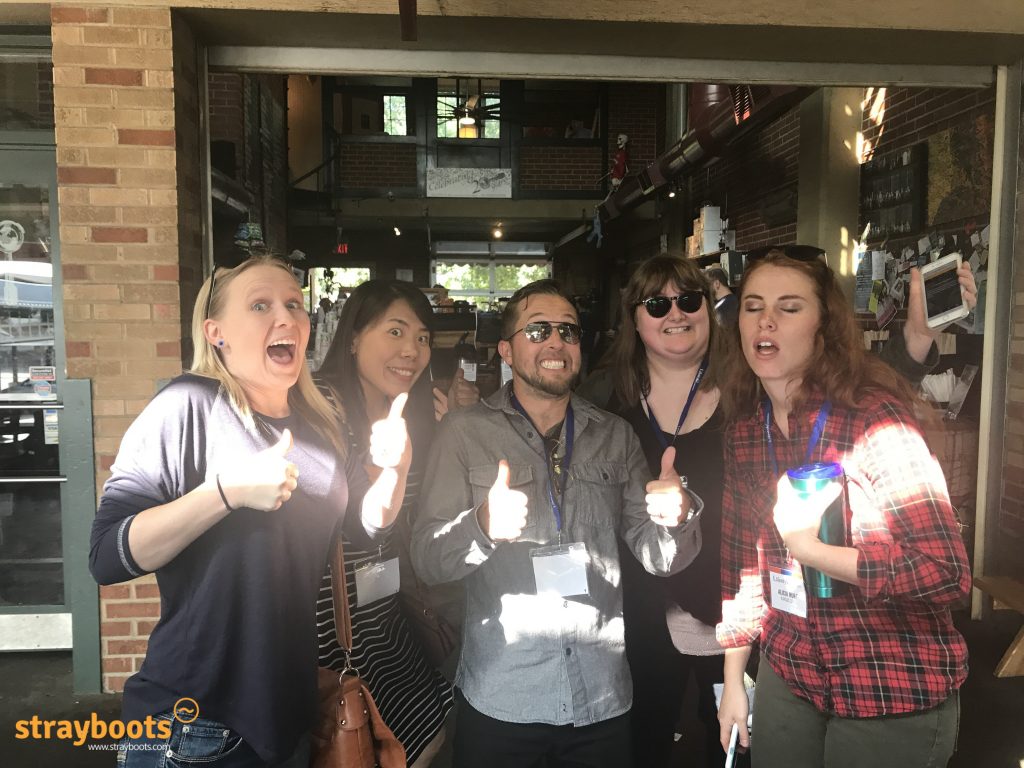
Wireless communication already connects all of us and makes team collaboration much easier. Strayboots has found a way to innovate team building with this valuable tool. We provide app-guided scavenger hunts and trivia games for businesses worldwide. Teams are connected to the game via their smartphones, solving problems, following interactive maps, and taking fun pictures along the way.
Don’t just take our word for it; 70% of Forbes Global 2000 companies use gamification to engage their teams. Our games include everyone, thanks to the fantastic power of cell phones. Start the new year with a workplace of engaged employees and give Strayboots a try!